
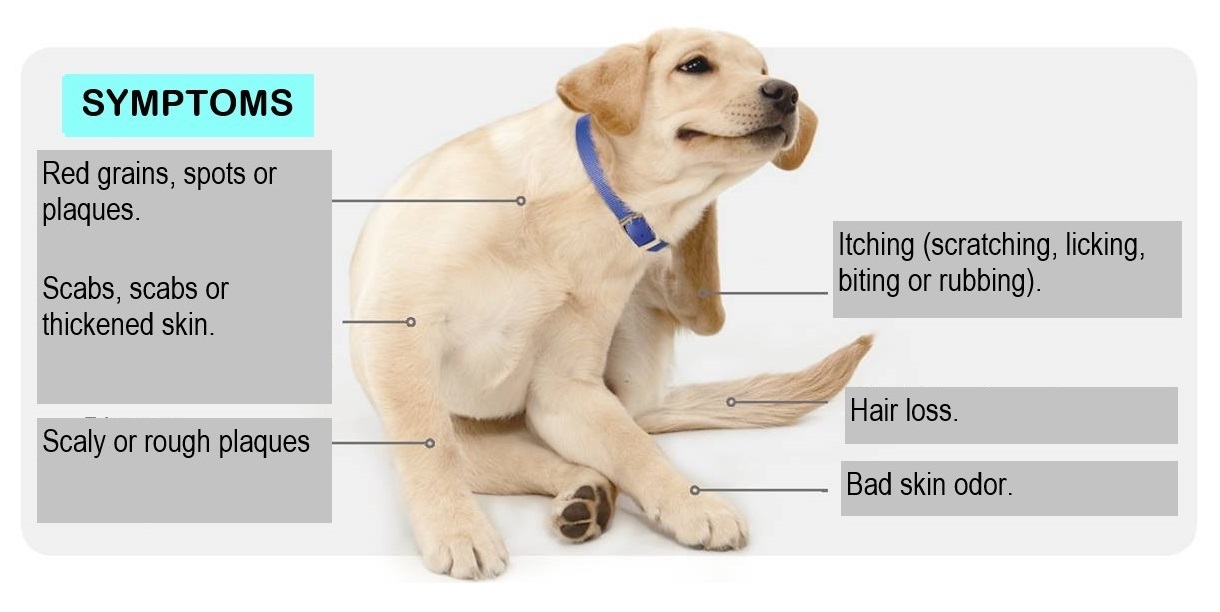
Dogs can suffer from various skin problems that cause pain, itching, allergies and/or inflammation.
In some cases they can be manifestations of other health problems, so it is very important that you know the causes, symptoms and treatment of the most common canine dermatoses that can affect your dog.
Why is it important to keep my dog’s skin healthy?
«A dog’s skin acts as a barrier between its organs, muscles and skeleton, and the environment. In itself, it is the largest organ of his body and, including his fur, accounts for about 12% of his entire body weight.» (Information taken from: https://basicfarm.com)
Your dog’s skin is the largest organ of his body and functions as a filter between his environment and his body, which is why you must take proper care of it.
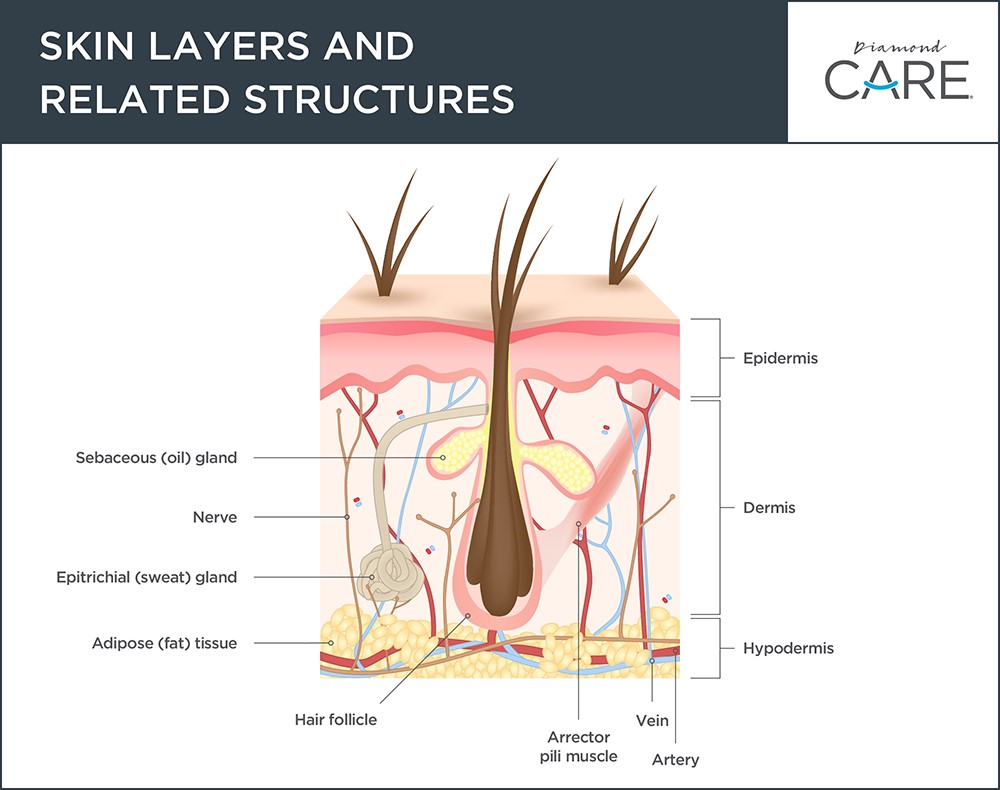
Did you know that the skin provides vital health benefits for your dog?
The skin not only has a protective function for the body, but also brings many other benefits, such as:
- – vital protection against parasites, preventing the entry of microorganisms (bacteria, fungi).
- – stores fat,
- – prevents the loss of water and vitamins,
- – keeps the body hydrated,
- – harbors sensitive nerve endings, (informing the body about temperature, pressure, pain and itching).
- – activates vitamin D,
- – is responsible for the sense of touch,
- – regulates body temperature.
What are the main visible symptoms I can observe to know if my dog has a skin problem?
It is important that you observe your dog very well. You must know which are the symptoms your dog feels before going to the veterinarian. In that way, you can give detailed information to the Vet, so he/she can make a dermatological study and provide an adequate treatment.
- – Continuous scratching or itching (sometimes the itching is so strong that they even eat the hair in some areas of the body).
- – Constant licking or biting of the skin: Sometimes they rub their face or body against the floor, walls, furniture or carpets.
- – Alopecia or hair loss: hairless areas.
- – Very dry skin: presence of dandruff or flakes in the hair.
- – Very oily skin: which makes the hair very oily.
- – Redness and/or rashes on the skin.
- – There are areas on the skin that become very hot.
- – They usually produce a bad odor.
- – Inflammation of the skin between the toes on the front and hind legs.
- – Inflammation of the ears.
- – In more severe cases, presence of pus in areas of the skin.
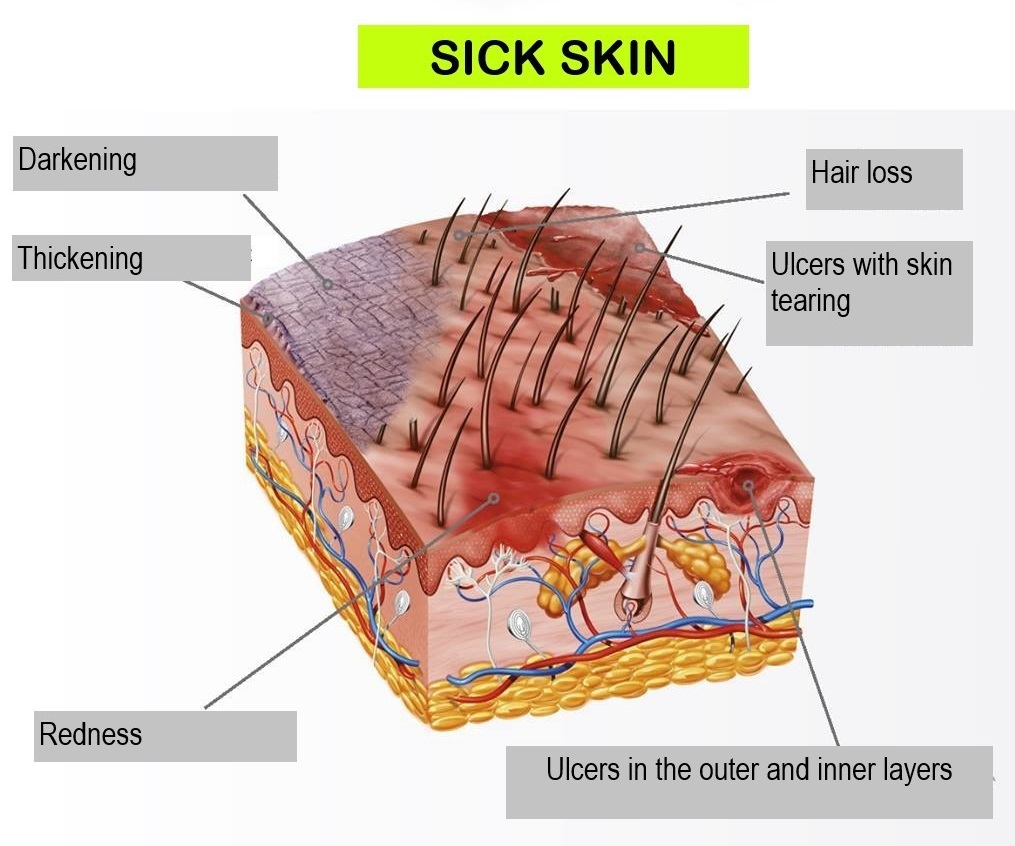

Images taken from https://www.facebook.com/CVHPet/photos/a.373152296121056/2810617995707795/?type=3
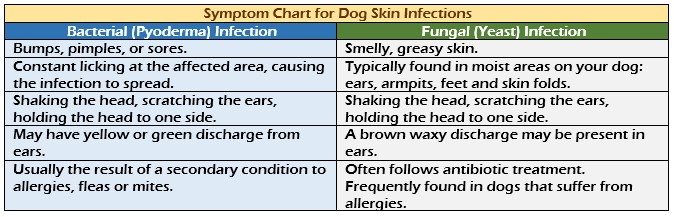

What are the possible causes or reasons for my dog to develop a skin disease?
The reasons can be diverse, as they may be:
- 1. Unique to a particular dog,
- 2. More generally known for a breed in particular,
- 3. Age,
- 4. Environment where they live,
- 5. Genetic factors.
Most common skin diseases in dogs.
- 1. Parasitic Dermatitis: Flea bites and / or ticks.
- 2. Food Dermatitis.
- 3. Atopic Dermatitis due to External Factors.
- 4. Fungal Dermatitis (Mycosis).
- 5. Seborrheic Dermatitis.
- 6. Parasitic Dermatitis: Scabies.
- 7. Intertrigo Dermatitis.